The Battle of Britain Memorial Window RAF Chapel, Westminster Abbey, London, England, September 16, 2025.

At the east end of the Lady Chapel in Westminster Abbey, London, there is a chapel dedicated to the Royal Air Force. This chapel honours the fighter pilots and crew from the United Kingdom, the Commonwealth, and allied nations who lost their lives during the Battle of Britain, which took place from July 10 to October 31, 1940.
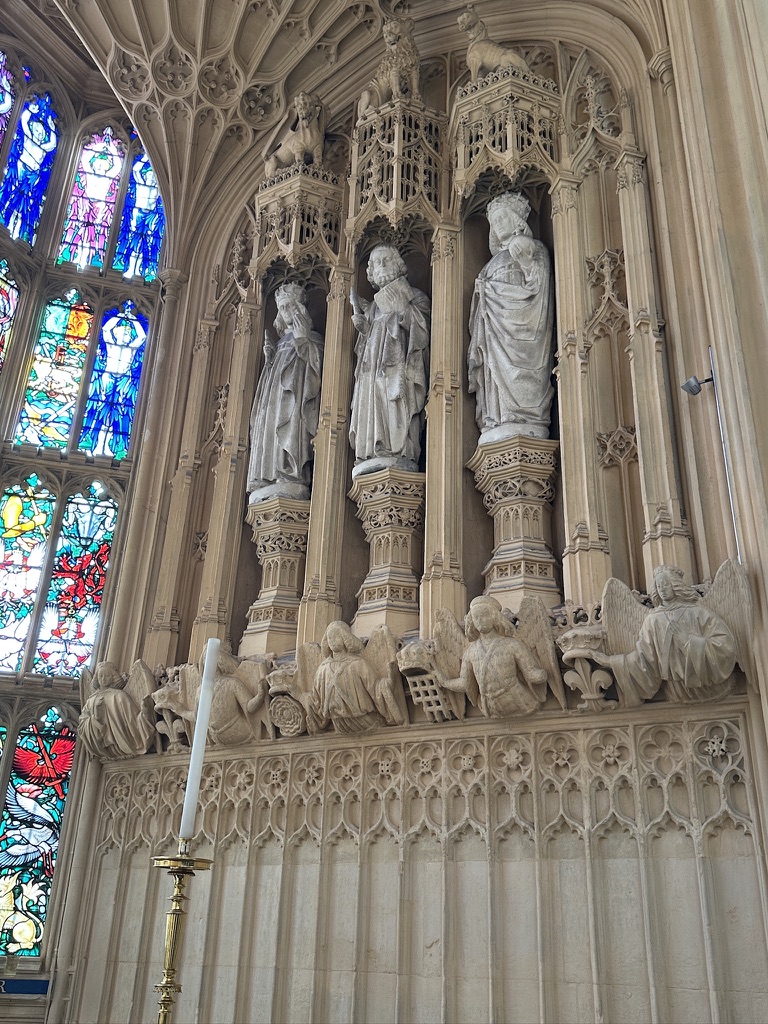
The Battle of Britain Windows, designed by Hugh Easton, were dedicated on July 10, 1947 and feature 48 lights. Bombs that fell during the war damaged the chapel and destroyed the Tudor glass. A glass cover preserves a hole in the stonework. The establishment and dedication of this chapel and memorial were among the earliest wartime efforts to honour those who had been lost.
Proposed as a memorial to “The Few” in 1943, it was unveiled on July 10, 1947, by King George VI. Marshal of the RAF, Lord Trenchard and Lord Dowding, leader of the Fighter Command, led fundraising efforts to furnish the chapel and create a stained-glass window. The English walnut altar, designed by A.E. Richardson, features sculptures of King Arthur and St. George. J. Seymour Lindsay designed the silver cross, candlesticks, and rails.

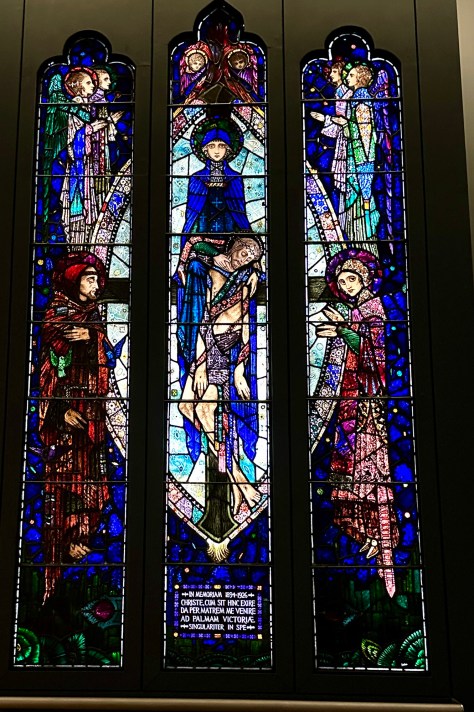
The window’s upper tier displays majestic Seraphim with six wings and outstretched hands reaching toward paradise in glass of vivid blue and red glass. Pilot faces are based on actual RAF personnel, Hugh Neil and Wing Commander Gordon Sinclair.
The other lights include squadron badges and scenes of Redemption, the Pieta, the Crucifixion, and the Resurrection. Flags representing New Zealand, Canada, Australia, South Africa, Czechoslovakia, Poland, Belgium, and the United States are displayed.
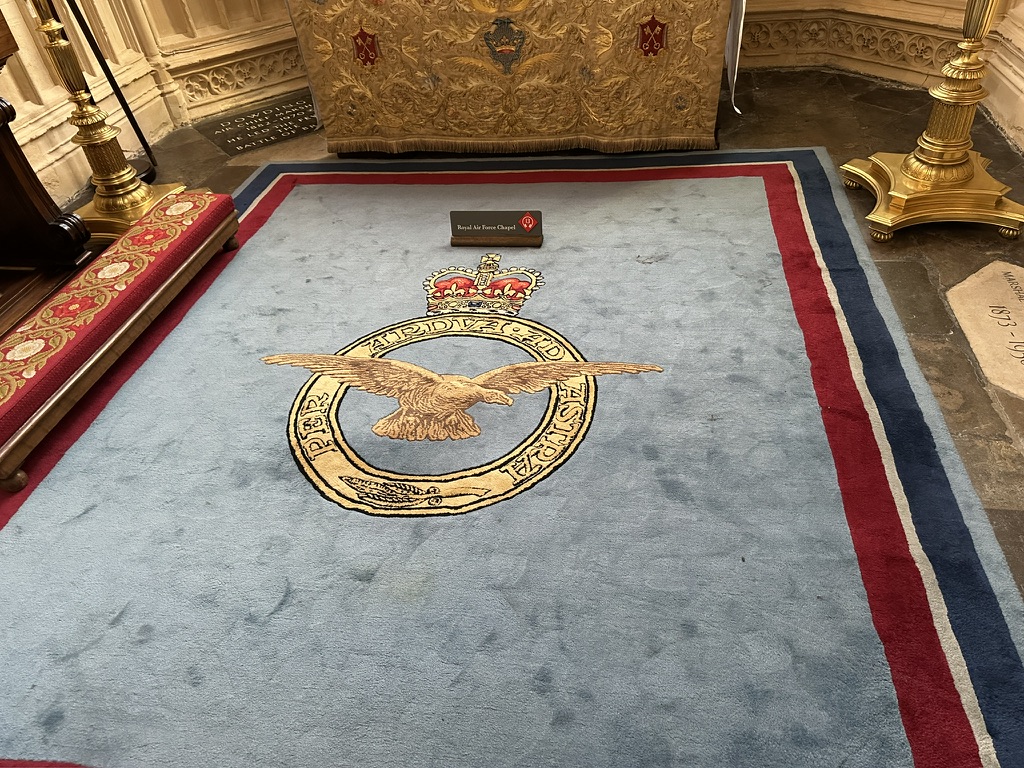
The meaning and symbolism behind each panel convey the stories commemorated by the window. The central section displays the RAF motto “Per Ardua ad Astra”, meaning Through struggle to the Stars. There are 70 Squadron badges of the fighter squadrons involved in the Battle displayed in the window. Some were inadvertently left out in the original design and later added in 1961.
A squadron leader kneels before the sorrowful Virgin Mary and the Christ Child, with the dead Christ across her knees below, symbolizing the sacrifice of mothers and widows of those who perished in the conflict.
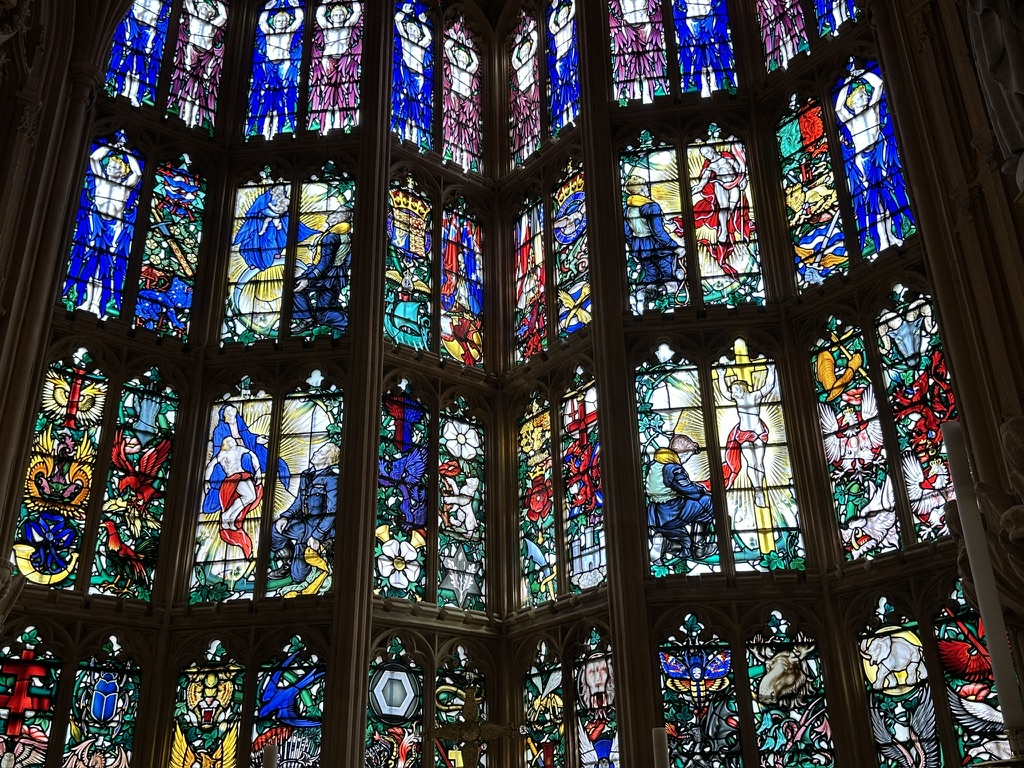
In the third tier to the right, kneeling before the Crucifix, a pilot’s sacrifice on the opposite side and above this, the Resurrection is reflected through the eyes of a pilot officer, symbolizing triumph.

The quote “We few, we happy few, we band of brothers”, from the Shakespeare play ‘Henry V’, is featured in lower panels.

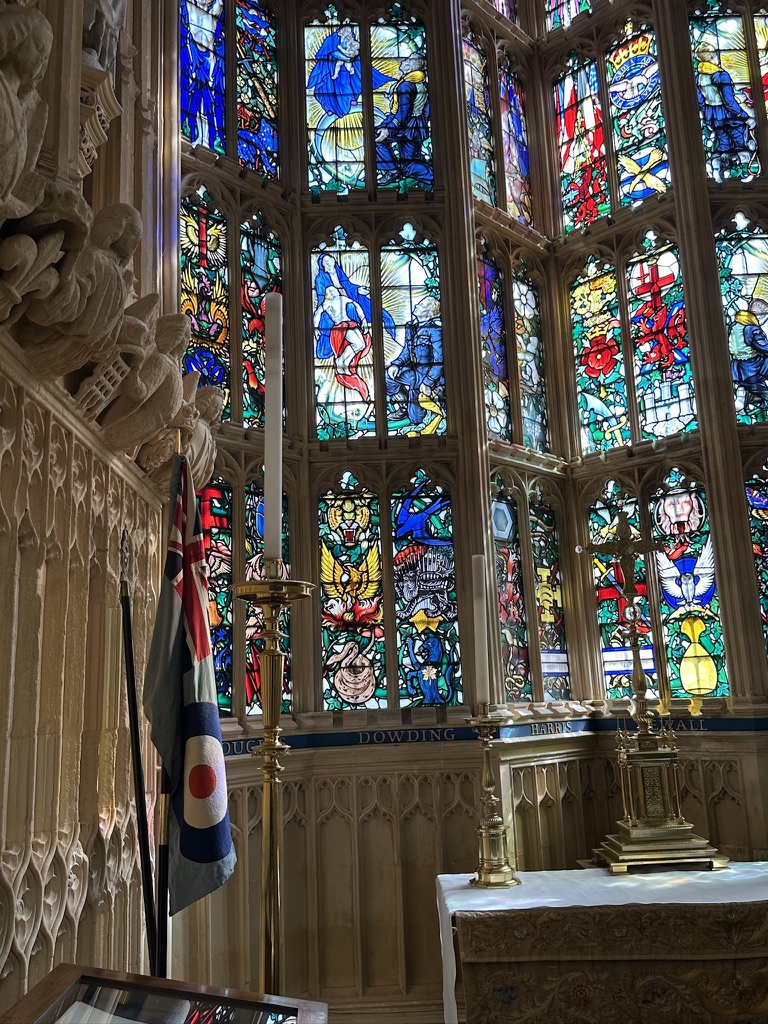
Below the glass on the stonework are the names of six prominent RAF leaders, all of whom held the rank of Marshal of the RAF: William Sholto Douglas, Hugh Dowding, Arthur Harris, Cyril Newall, Charles Portal, and Arthur Tedder. Trenchard and Dowding are buried in this chapel.
The structural angles and geometric lines illustrate the organized, unified, and effective nature of the ‘Dowding System,’ which integrated radar and fighter aircraft technologies, allowing Britain to achieve a critical advantage against the Luftwaffe and ultimately secure victory in the battle.

Hugh Ray Easton (November 26, 1906 – August 15, 1965) was born in London, studied in France, and established his own studio in Cambridge, UK. During World War II, he served as a commander at the Ministry of Information in the Royal Naval Volunteer Reserve (RNVR). Most of his windows were crafted at the studios of Robert Hendra and Geoffrey Harper in Harpenden. Easton died on August 15, 1965, in London. A memorial service was held at Westminster Abbey, in the Henry VII Chapel, on September 24, 1965.
These windows commemorate the Royal Air Force personnel who lost their lives in the Battle of Britain. They also remember my 2nd cousin, Camille BonSeigneur, from Gull Lake, Saskatchewan, who served as a Pilot Officer with Squadron 257. Camille was killed in action during the Battle of Britain on September 3, 1940 at 22 years of age at The Grove Wood.
Sources:
https://www.westminster-abbey.org/abbey-commemorations/commemorations/hugh-easton
https://www.westminster-abbey.org/history/explore-our-history/raf-chapel











 borealisboutique